
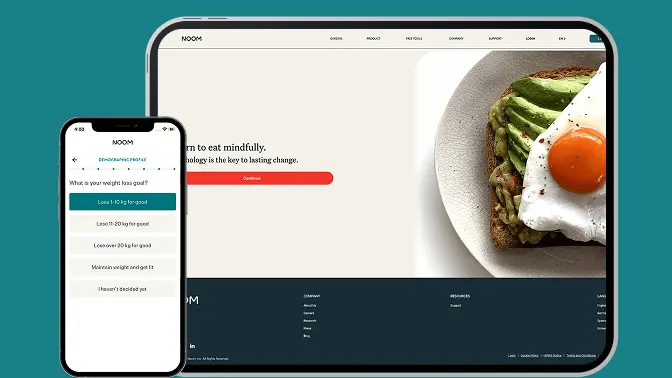
Noom
AI-powered personalized habit coaching engine for health and weight management.
View Case Study → Citrusbug Healthcare →

 ISO 27001
 SOC 2
SOC 2
 HIPAA
HIPAA
Trusted by industry leaders















Certifications and Accreditations










Customer portals, booking flows, and internal tools built with React 19, TypeScript, and TanStack Query, structured around feature folders so a new engineer can find and change code within their first week.

Products that depend on search visibility run on Next.js 16 with server rendering, Cache Components, and image optimization, tuned against Core Web Vitals targets like INP and LCP from the first release.
.svg)
Data-dense screens with virtualized tables, role-based views, and real-time updates over WebSockets. Charts render thousands of rows without freezing the browser, using TanStack Table and memoized selectors.

Figma tokens become a documented React component library in Storybook, checked against WCAG 2.2, so every product team reuses the same buttons, form patterns, and modals across web apps.

Angular, AngularJS, jQuery, and Create React App projects move to React on Vite or Next.js in phases, with routes migrated one at a time so users never see a hard cutover.
.svg)
Teams already running React on the web can reach iOS and Android through React Native development, sharing validation logic, API clients, and design tokens across all three platforms.

React front ends connect to REST, GraphQL, Stripe, Auth0, and Salesforce APIs through typed clients generated from OpenAPI or GraphQL schemas, which catch contract breaks at build time.

Streaming chat panels, AI copilots, and document summaries built into existing React screens, backed by LLM APIs with token streaming, loading states, and fallbacks that handle a timed-out model call cleanly.
Tell us what your team needs to ship, and we will map the right React engineers, engagement model, and sprint structure for the work.
Discuss Your React RoadmapEach option solves a different constraint. This comparison shows where React development outsourcing fits against hiring and freelancing on the factors that decide whether a roadmap ships on schedule.
| Factor | In-House React Hire | Freelance React Developer | Outsourced React Team |
|---|---|---|---|
|
Time to first merged pull request |
Months, after recruiting and notice periods |
Days to weeks, depending on availability |
Days after scope sign-off |
|
Cost structure |
Salary, benefits, equipment, recruiting fees |
Hourly rate |
Fixed-Price, Time and Material, or Dedicated Team |
|
QA, DevOps, and design coverage |
Separate hires |
Rarely included |
Built into team composition |
|
Continuity when someone leaves |
Knowledge leaves with the person |
Single point of failure |
Team-level documentation and replacement |
|
Code review |
Depends on existing seniority |
Usually self-reviewed |
Senior review on every pull request |
|
Scaling up or down |
Tied to hiring cycles |
One person at a time |
Team size adjusts between sprints |
|
Source code ownership |
Yours |
Contract-dependent |
Yours at delivery, NDA by default |

YOUR SPRINTS, OUR ENGINEERS

WE OWN SPRINT DELIVERY

DEFINED SCOPE AND MILESTONES
Your React outsourcing team works with a modern stack selected around your application, performance requirements, testing needs, and existing architecture. We can work within your current stack or recommend upgrades where they provide a clear engineering benefit.

React and Next.js for modern web applications and server-rendered experiences
TypeScript for maintainable, strongly typed application code
TanStack Query for server-state and API data management
Vitest and Testing Library for unit and component testing
Playwright for end-to-end browser testing
React Native when web and mobile products need shared logic
Stalled projects, outdated dependencies, and inherited repositories can slow every release. Our React teams assess the current codebase, prioritize the highest-impact fixes, and modernize the foundation while your product roadmap keeps moving.

Before changing code, we map what exists, what breaks, and what slows each release, then rank every fix by its effect on delivery.
• Dependency and CVE scan
• Bundle size and Core Web Vitals baseline
• Test coverage and flaky test report
• Architecture notes and risk register

Upgrades follow a staged plan, so removed APIs such as string refs and legacy context are replaced before the version bump reaches production.
• Codemods for removed legacy APIs
• React Compiler rollout route by route
• Manual useMemo retired where safe
• Regression suite before each release

Create React App is deprecated, so we move react-scripts projects to Vite or Next.js based on routing and SEO needs, as part of wider legacy application modernization.
• Vite for SPAs and internal tools
• Next.js where SEO or SSR matters
• Environment variables and proxies remapped
• CI pipeline rebuilt for the new tooling

The React Server Components vulnerabilities disclosed in late 2025 showed how fast an unpatched framework version turns into a production risk for teams on Next.js.
• React and Next.js patch tracking
• Renovate or Dependabot update policy
• Secrets rotation after critical patches
• SBOM export for security reviews
Work starts with user stories, wireframes, and acceptance criteria written before any component is built. For existing products, discovery also includes a repository walkthrough with your engineers. The output is a prioritized backlog and a written scope. That scope becomes the baseline for estimates, the fixed-price contract, or the first dedicated-team sprint plan.
A client-rendered SPA on Vite suits dashboards behind a login. Public pages that depend on search traffic need server rendering through Next.js. We record this choice, along with state management, API contracts, and folder structure, in architecture decision records, so the reasoning outlives the people who made it.
Engineers are matched to your stack and time zone overlap. They are then onboarded to your repositories, Slack or Teams channels, Jira or Linear boards, and CI pipeline. A tech lead owns code quality from the first pull request, and repository access is granted only after the NDA is signed.
Each sprint ends with a working demo on a staging URL. Between demos, daily written updates cover what merged, what is blocked, and what needs a product decision. Every pull request gets senior review and passes type checks and tests in CI. Risky releases ship behind feature flags for a controlled rollout.
Component tests run in Vitest and React Testing Library. Critical journeys like signup and checkout run end-to-end in Playwright. Performance budgets for bundle size, LCP, and INP fail the build when a change regresses them, and accessibility checks run against WCAG 2.2 AA before anything reaches production.
Production releases follow a documented runbook with rollback steps. At handover, you receive the repositories, documentation, credentials, and a recorded walkthrough. Post-launch L1, L2, and L3 support options under SLA keep the product patched and monitored. Your in-house team can take over any part of the codebase whenever it chooses.
AI-powered personalized habit coaching engine for health and weight management.
View Case Study →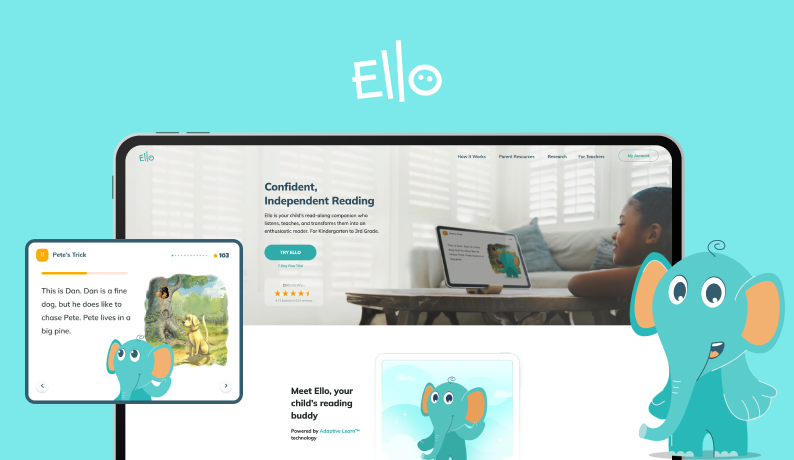
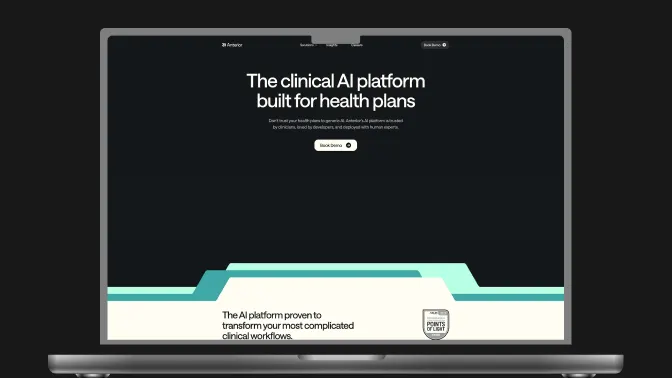
AI clinical workflow automation platform that transforms administrative healthcare processes like prior authorization.
View Case Study →A React development outsourcing contract is only as good as what your team can maintain after it ends. We treat handover as a deliverable with its own acceptance criteria, reviewed by your engineers before sign-off. NDA coverage applies from the first call, and full source code ownership transfers at delivery.
.svg)
TypeScript in strict mode, ESLint with the React Hooks plugin, and Prettier enforced in pre-commit hooks. New engineers inherit consistent code, and type errors surface in the editor long before a pull request opens.

Unit and component tests in Vitest with React Testing Library, plus Playwright end-to-end tests for revenue-critical journeys. Coverage reports ship with the repository, so your team knows exactly which areas are protected.

Each shared component is documented in Storybook with props, states, and accessibility notes. Designers and engineers review one source of truth, which keeps new screens consistent without extra review rounds.

GitHub Actions or GitLab CI pipelines build, test, and deploy to preview, staging, and production. These pipelines can be extended with DevOps automation for infrastructure as code and release approvals.

Decision records explain why each major choice was made, and runbooks cover deployment, rollback, and incident response. Six months later, nobody has to reverse-engineer intent from commit history.
A client-rendered dashboard behind a login costs less than a Next.js product that needs server rendering, a caching strategy, and structured data for organic search.
Each payment, identity, CRM, or ERP integration adds contract design, error handling, and test fixtures. Undocumented legacy APIs add discovery time before UI work begins.
Greenfield builds are easier to estimate. Inherited repositories with low test coverage, outdated dependencies, or a Create React App setup need stabilization work priced in first.
Complete Figma files with a token system speed delivery. Wireframes only, or no design at all, means UX and UI design hours join the estimate.
A tech lead, two React engineers, and QA cost differently from one augmented developer. The seniority mix follows architectural risk and the delivery speed you need.
HIPAA-aligned audit logging, SOC 2 evidence, or PCI DSS payment flows add security reviews, access controls, and documentation that a marketing site never needs.
Small to mid-sized React apps typically range from $15,000 to $30,000, while complex enterprise builds can exceed $100,000. Share your scope for an itemized estimate.
Their agile way of working, competence, and friendliness are impressive.December 7, 2024
Citrusbug Technolabs handles a data extraction project for an education company. They're also responsible for managing an AI generation project for the client.
Citrusbug Technolabs has laid out and followed a clear project outline and consistently met deadlines. The team communicates well and demonstrates a strong understanding of the client's vision and goals. Their agile approach, high level of competence, and personable approach stand out.
 Read More
Their communication and ability to capture exactly what I was asking for were impressive.November 14, 2024
Citrusbug Technolabs built an automated system for a veteran medical company. The system needed to collect and store user data, generate customized letters based on surveys, and use AI to summarize reviews.
Citrusbug Technolabs delivered a functional automated system that successfully organized the client's records and auto-generated statements. The team was quick to respond, addressed all roadblocks, and communicated effectively. Overall, their ability to understand the client's needs stood out.
Read More
They were very calm and talented, and they did bring some of their own ideas.January 28, 2025
Citrusbug Technolabs has developed an MVP for a freight and capacity marketplace. The team has created three different interfaces for three market segments.
Citrusbug Technolabs has successfully developed an effective MVP. The team has delivered the project on time and almost within budget. Moreover, their responses have been timely. Overall, the team has been calm, talented, and innovative. This has led to the client's satisfaction.
Read More
What stood out most about them was their personalized approach and sense of ownership in every aspect of the project."February 27, 2024
Citrusbug Technolabs built a Flutter cross-platform mobile app for an education company. They also developed two web apps and an admin panel and provided DevOps support for the client's infrastructure.
Citrusbug Technolabs' support successfully boosted the client's user engagement by 8x, resulting in an 85% retention rate. The reliable team demonstrated a dedication to delivering on time and promptly responding to concerns and adjustments. Their personalized, client-centric approach stood out.
Read More
They didn't like the phrase "impossible to do", which made them very solution-oriented.February 19, 2024
A healthcare company hired Citrusbug Technolabs to design and develop a user-friendly application. The team provided tailored assistance to meet the client's requirements.
Citrusbug Technolabs successfully delivered an application that was ready for market. The team was highly professional and well-organized; they stayed focused throughout the engagement and were receptive to changes. Overall, they stood out for their trustworthiness and commitment to excellence.
Read More
They're 100% on time and transparent throughout each stage of the project.February 24, 2024
A financial technology company has hired Citrusbug Technolabs to build a custom web application. The team handles the development and design of the app.
The project is ongoing, but the client has been satisfied with Citrusbug Technolabs' services. The team is very professional — they always respect timelines and provide regular updates to ensure everyone's on the same page. Also, their transparent approach makes them a trustworthy partner.
Read More
"I do believe they are exceptional at where they stand."
Citrusbug Technolabs took on a mobile app development project for a Singapore-based development house. They were provided with UX designs to execute. Currently, they're finalizing and fine-tuning the product.
Citrusbug Technolabs contributed to the successful launch of the product, which has garnered over 10,000 users in just three months. The product has also received support from investors. They consistently followed-up with their progress and delivered at a speedy rate. The team is truly stellar.
Read More

We clarify user flows, technical constraints, integrations, and acceptance criteria before development begins, giving your React team a defined backlog instead of starting from assumptions.

A senior React engineer reviews every merge for architecture, typing, and test coverage, so code quality holds steady as your outsourced team grows or rotates.
Over thirteen years of software delivery sit behind every React team we assemble, across healthcare, fintech, logistics, and SaaS products with real users.

Next.js and SPA deployments are sized to real traffic on Vercel, AWS, or Azure, with caching and edge settings reviewed so hosting bills track actual usage.
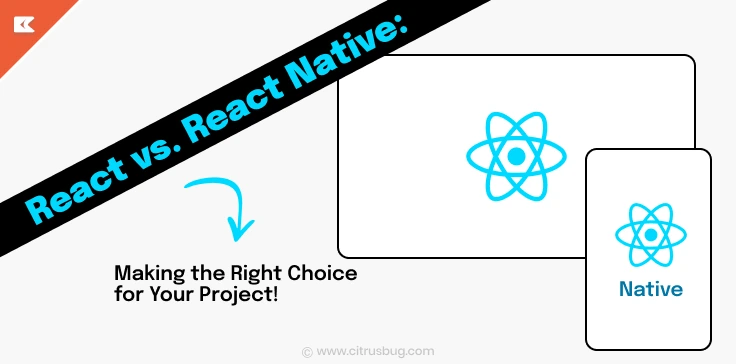
 React
React
When it comes to building apps, choosing the correct and intelligent technology is the key. React vs. React Native is a common debate for developers aiming to create dynamic as…
Read Article → React
React
The front-end development workspace is evolving daily with new tools and frameworks. Yet, such upgradation in the tech stacks results in easy and swift work. Choosing the appropriate react developer…
Read Article → React
React
In today’s era of technical advancements, mobile app development is really crucial for the success of organizations. It is a really complicated process that needs a lot of time and…
Read Article →Outsource when you need senior React capacity within weeks or for a defined roadmap. Hire in-house for long-term core ownership. Many teams combine both, with outsourced engineers covering the gap while recruiting continues.
Small to mid-sized React apps typically fall between $15,000 and $30,000, and complex platforms can pass $100,000. Integrations, rendering model, codebase condition, and compliance scope decide where your project lands.
A basic React application commonly takes 6 to 12 weeks. Larger products with multiple integrations can run up to six months. Discovery produces a sprint-level timeline before development starts.
You do. Source code, repositories, design files, and documentation transfer to you at delivery, and an NDA covers the engagement from the first call.
Check recent React 19 and Next.js work, ask who reviews pull requests, confirm code ownership terms, and request a discovery phase or trial sprint before committing to a long contract.
Yes. We start with an audit of dependencies, test coverage, performance, and security, then stabilize the build before adding features. Stalled and half-finished React projects are a regular starting point for us.
They join your Slack or Teams channels, Jira or Linear boards, standups, and code review process. Your leads approve merges, and our tech lead keeps standards consistent across both teams.
Yes. Upgrades follow a staged plan with codemods, regression tests, and route-by-route React Compiler adoption, so production keeps running while legacy APIs are removed.
Yes, when the product benefits from shared logic. Validation rules, API clients, and design tokens can be shared between React web and React Native, which reduces duplicated work across platforms.
L1, L2, and L3 support options under SLA cover monitoring, patching, and feature work. Free maintenance applies for an agreed initial period after launch.


