










CargoFax
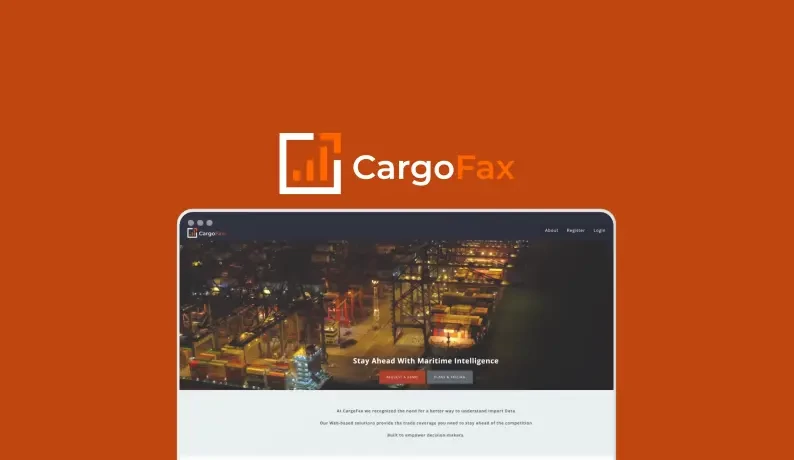
A data-driven import insights platform designed to help businesses make smarter import decisions.
View Case Study →Trusted By Industry Leaders
An upstream change ripples downstream unnoticed until a dashboard has been wrong for weeks and nobody caught it.
Nightly ETL runs that once took an hour now take six, and business teams wait on numbers that were already stale by breakfast.
When a number looks wrong, nobody can trace it back to source without days of digging across five different tools and two data silos.
Undocumented scripts built by someone who left two years ago, still quietly running production reports nobody wants to touch.
A short audit shows exactly where pipelines are fragile, undocumented, or quietly costing you time.
Start a Conversation
We build ETL and ELT pipelines that handle whatever your systems actually produce, including inconsistent APIs, flat files, and legacy databases nobody wants to touch. This extends into full ETL and ELT integration work with orchestration on Airflow or Dagster, retries, and alerting built in from day one.
Snowflake, Databricks, and BigQuery all solve different problems well. We design the storage and compute layer around your actual query patterns and cost ceiling, using Apache Iceberg as the table format when portability across engines matters to you.
Batch jobs still have their place, but fraud checks, inventory updates, and operational alerts cannot wait for a nightly run. We build streaming pipelines on Kafka or equivalent tools so downstream systems see events within seconds, not hours.
Every pipeline gets automated quality checks, access controls, and lineage tracking built in, not bolted on after a compliance audit flags a gap. Great Expectations and catalog tooling like Unity Catalog keep the data trustworthy as it scales.
Every project starts from the same open-standard core so nothing you get is proprietary to Citrusbug. Storage sits on cloud object stores, the table format is typically Apache Iceberg or Delta Lake, transformation runs through dbt, and orchestration runs through Airflow or Dagster.
A data-driven import insights platform designed to help businesses make smarter import decisions.
View Case Study →
AI-based personal health monitoring and preventive care platform designed to transform diverse clinical and patient data into actionable insights.
View Case Study →
Every pipeline lives in source control with clear documentation, not a script only one engineer understands. If someone leaves, the pipeline keeps running exactly as it did before.
You can trace any number on a dashboard back to the source table and the transformation that touched it, without opening five different tools to piece it together.
When the goal is moving off an aging on-premises warehouse, we plan the cloud migration alongside the new pipeline build so nothing runs twice.
Clean data and AI-ready data are not the same thing. We structure and catalog data so it can feed AI and machine learning models without another six-month prep project first.
Pipeline failures trigger alerts before they become business problems, so your team knows what failed and where without waiting for incorrect numbers to surface.
We map your current pipelines, data sources, and pain points first, so the build plan targets what's actually broken instead of guessing.
We choose the storage, transformation, and orchestration layer based on your query patterns and budget, not a default stack we reuse everywhere.
Pipelines get built incrementally with automated tests at each stage, so a broken transformation gets caught in staging, not in a client's dashboard.
You get source code, lineage documentation, and a walkthrough with your team, not a pipeline only Citrusbug engineers know how to touch.
Cost depends mostly on how much rebuilding versus new build is involved, and how much governance the industry requires. The range below reflects what that actually looks like in practice.
Pipeline Audit and Roadmap
Core Platform Build
Full Data Platform and Governance
Most data engineering engagements run from $15,000 for a focused pipeline audit to $250,000 or more for a full platform build. Tell us what you're working with and we'll give you a real range.
Big data analytics is the collection of processes and advanced technologies used by organizations to adopt the data-driven decision-making model. Here, we’ll discuss how big data analytics can unleash the…
Read Article →
A chatbot answers questions inside a fixed script. An AI agent reasons across your systems, decides what needs to happen next, and takes the action itself, without a human closing…
Read Article →
Managing patient data in healthcare is becoming more complex by the day. Hospitals, clinics, and insurance companies deal with large volumes of sensitive information, and their safety is always a…
Read Article →Pipeline architecture, ETL/ELT development, storage design, governance controls, and documentation. Scope depends on whether you're rebuilding an existing stack or starting fresh, defined during the audit phase.
Yes, we build on AWS, Azure, and Google Cloud, and design cloud-agnostic architecture using open table formats when portability across providers matters to you.
We run the new architecture alongside the old one and cut over gradually, so reporting doesn't stop while the migration happens.
A pipeline audit takes 2 to 4 weeks. A full platform build typically runs 8 to 16 weeks depending on source complexity and governance requirements.
Yes, full source code, pipeline documentation, and lineage maps transfer to you at handover. Nothing stays locked in a proprietary tool only we can run.
Yes, this comes up often. We audit what exists, document what it actually does, and rebuild only the parts that are genuinely broken.
Architecture is designed for the volume you're planning for, not just what you have today, using cloud-native storage that scales without a re-platform.
Yes, as an optional add-on covering monitoring, pipeline maintenance, and incident response. Some teams prefer to run it in-house after handover instead.